


After years of career pursuits and achievements, Ben discovered that true fulfillment came not from financial gain but from integrating faith, vocation, and community impact.
By Josh Battle

Ben Erskine, Miami University, Class of ‘07
An Unexpected Beginning
Some careers follow a straight line — from school to internships, a first job offer, and then a steady climb up the ladder. Others take shape through unexpected turns, chance encounters, and a measure of providence. Ben Erskine’s story encompasses a mix of both.
He began studying architecture at Miami University before shifting to finance. Though each discipline helped shape skills that would serve him later, neither would define his eventual path. Instead, a series of discussions unexpectedly led him into the field of real estate investment, ultimately setting him on a journey of spiritual discernment, renewed faith, and vocational fulfillment.
“I’ve always been drawn to the design of physical spaces and the power of place,” Ben shared. “I bartended in college, and one night struck up a long conversation with a friend’s father, who was in commercial real estate. After a late-night talk where I shared my passion for business and design, he offered me an internship on the spot.”
That moment, which Ben now attributes to divine direction, led to an 18-year career in real estate working first at The Staubach Company, and then at Jones Lang LaSalle. As he continued down this path, he discovered a natural affinity for the work.
“In hindsight, I now see that late-night conversation as God weaving something together that I couldn’t fully appreciate at the time,” he added.
Early Career Success and Lingering Questions
Working with two exceptional mentors and partners, Ben’s career took off at Jones Lang LaSalle. The accomplishments and accolades felt rewarding, as did the promotions. However, despite appearances that Ben was thriving, he began to experience a growing sense of discontentment and longing that would become more acute over time.
“Things were going better than I could have imagined,” he recalled. “I had a great job, with a top firm, incredible partners, and was earning more money than I ever thought I would. But I started to have the itch to sit in the principal seat. I wanted to be the person buying and developing the property, not only advising along the way.”
“Underneath this desire to do more, I also started to see that I had been idolizing financial success,” he added.
In his book “Counterfeit Gods,” Tim Keller defines an idol as “anything more important to you than God, anything that absorbs your heart and imagination more than God, and anything that you seek to give you what only God can give.”
For Ben, financial prosperity had become a distraction from what mattered most — the pursuit of God in all things — including the hours between 7:00 a.m. and 5:00 p.m. Money had become a counterfeit god, offering only the illusion of lasting value, purpose, and security.
Rekindled Faith and a Shift in Purpose
Yet, in another providential turning point, Ben discovered a piece that had been missing in his life for some time — a new home church. Surrounded by community and accountability, he began pursuing God in a new way, leading him to reassess not only what he was doing, but also what he was placing ultimate value in, and why.
“After finding my new church and rekindling my pursuit of God, I began asking, ‘Is this it?’,” Ben reflected. “I was achieving goals and advancing my career, but still felt unsatisfied. I started questioning the race I was running: ‘Where’s the finish line? What am I really aiming for?’ My sense of identity and purpose in my work was shifting.”
These questions demanded an answer, and they also reframed his vision for the future of his career. As he reassessed the purpose of his work, he also sought out organizations that were already addressing the relationship between one’s faith and one’s work.
“I noticed companies like Sovereign’s Capital that were deeply rooted in their faith values while also competing with excellence in the marketplace,” Ben said. “They didn’t believe that performance comes at the expense of biblical values, but because of them. It showed me that living out Christian values in business doesn’t weaken sustainability, it strengthens it.”
Stepping Into Faith-Driven Real Estate
Seeing real-life examples of faith influencing business practices in ways that benefit customers, investors, and the bottom line, Ben was inspired to take a transformative step. In 2020, he transitioned from a career in brokerage to co-founding Callis Capital, a real estate private equity fund that provides equity capital to faith-driven owners and operators. Leading Callis Capital offered Ben a revived sense of purpose as well as a new calling.
Callis Capital would eventually be — in yet another moment of God’s providence — acquired by Sovereign’s Capital in January 2023, bringing Ben’s pursuit of integrating his faith and work full circle.
“Sovereign’s Capital began as a venture capital firm, and then expanded into private equity and other asset classes,” he said. “When we joined them a few years ago, it was their first foray into real estate.”
Now a Partner at Sovereign’s Capital, Ben brings 18 years of experience in commercial real estate investment and brokerage. He advises several of the firm’s portfolio companies and leads its real estate strategy, partnering with faith-driven managers who view their platforms and portfolios as a means to develop lasting relationships and shape communities.
“The same things that create financial value often also create social, emotional, and relational value,” Ben shared.
“When you invest in people and promote flourishing, financial fruit often follows. As Christ followers, we’re called to care for people, and we can do that in a way that’s both faithful and financially sustainable, because there’s real value in it.”
Case Study: Investing for Flourishing
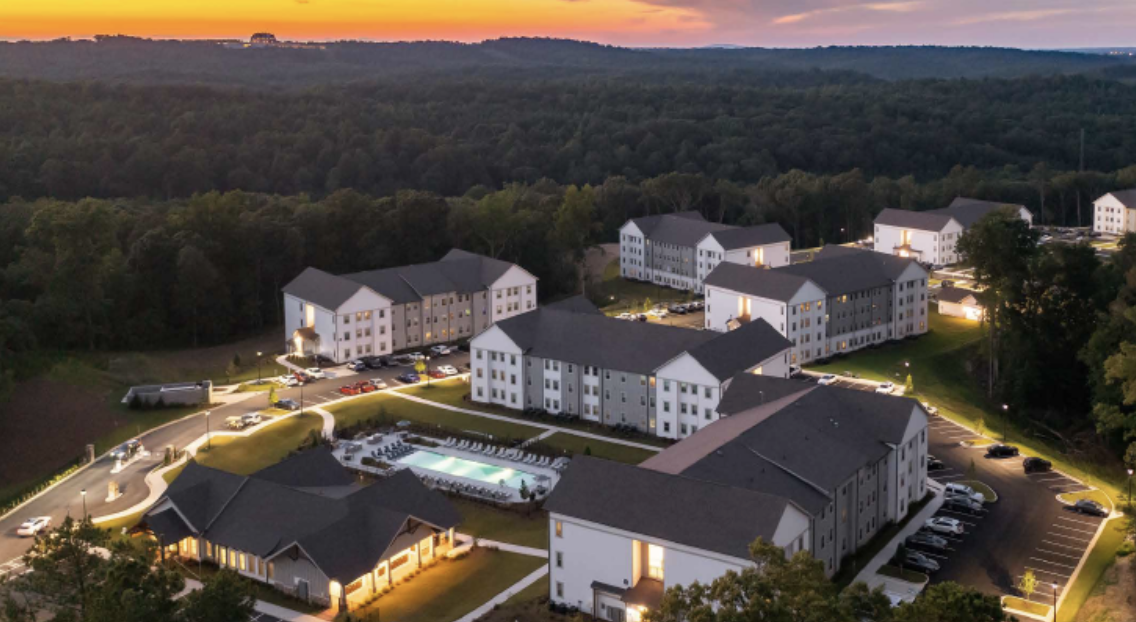
Ben illustrates this holistic value by pointing to a recent project in Fort Wayne, Indiana. The project reflects how Sovereign’s Capital seeks to love God and neighbor through its investment activities.
“For us, everything starts with relationships,” he said. “I had known the team in Fort Wayne for five years before we invested. I came to trust not only their capabilities but also their heart for people. We’re adding 300 modular housing units in a city that’s short about 5,000, and delivering them in nearly half the typical time. But what makes this project special isn’t just the speed or affordability; it’s the way the partners care for tenants and workers alike. Their property management team treats residents as neighbors, and their construction company creates stable jobs with a culture of holistic care — even offering opportunities for people who need a second chance. It’s a fantastic example of business, community, and mission coming together.”
“I go to bed encouraged by the fruit we’ve already seen through this project,” he continued. “And I wake up eager to keep expanding the impact of faith-driven investing done with both excellence and love.”
Living the Mission of the Center for L.I.F.E.
At Miami University’s Center for L.I.F.E., young entrepreneurs are encouraged to authentically live out their faith in and through their work. In an achievement culture that ties identity to career success, Ben Erskine embodies the heart of the Center’s mission by practically weaving his personal faith into his work in real estate.
“Faith has often been left out of the conversation, despite the broader culture’s embrace of ideas such as socially responsible business and values-based investing,” Ben said. “Those shifts are good, but faith can often still be viewed as off-limits.”
“The Center for L.I.F.E. is different,” he continued. “It openly recognizes that faith is the source from which our values are drawn, but does so in a way that’s open-handed and inclusive. That creates a rich environment where you have full permission to bring your whole self — whether you’re a Christian, come from another faith tradition, or even hold a different worldview but are curious about these questions. It’s a safe, judgment-free space where people can engage deeply, in a way that often doesn’t feel possible in the boardroom or classroom.”

